Caring for a hand-forged knife
Updated · Delmara Baltic Living
Wipe a hand-forged knife clean and dry right after use, keep a thin film of food-safe oil on the blade, and never put it in the dishwasher or leave it wet. Store it out of its leather sheath for long periods, sharpen on a whetstone at a steady angle, and wipe antler or wood handles dry. Cared for like this, a good knife lasts for generations.
Know your steel
| Steel | Character | Care |
|---|---|---|
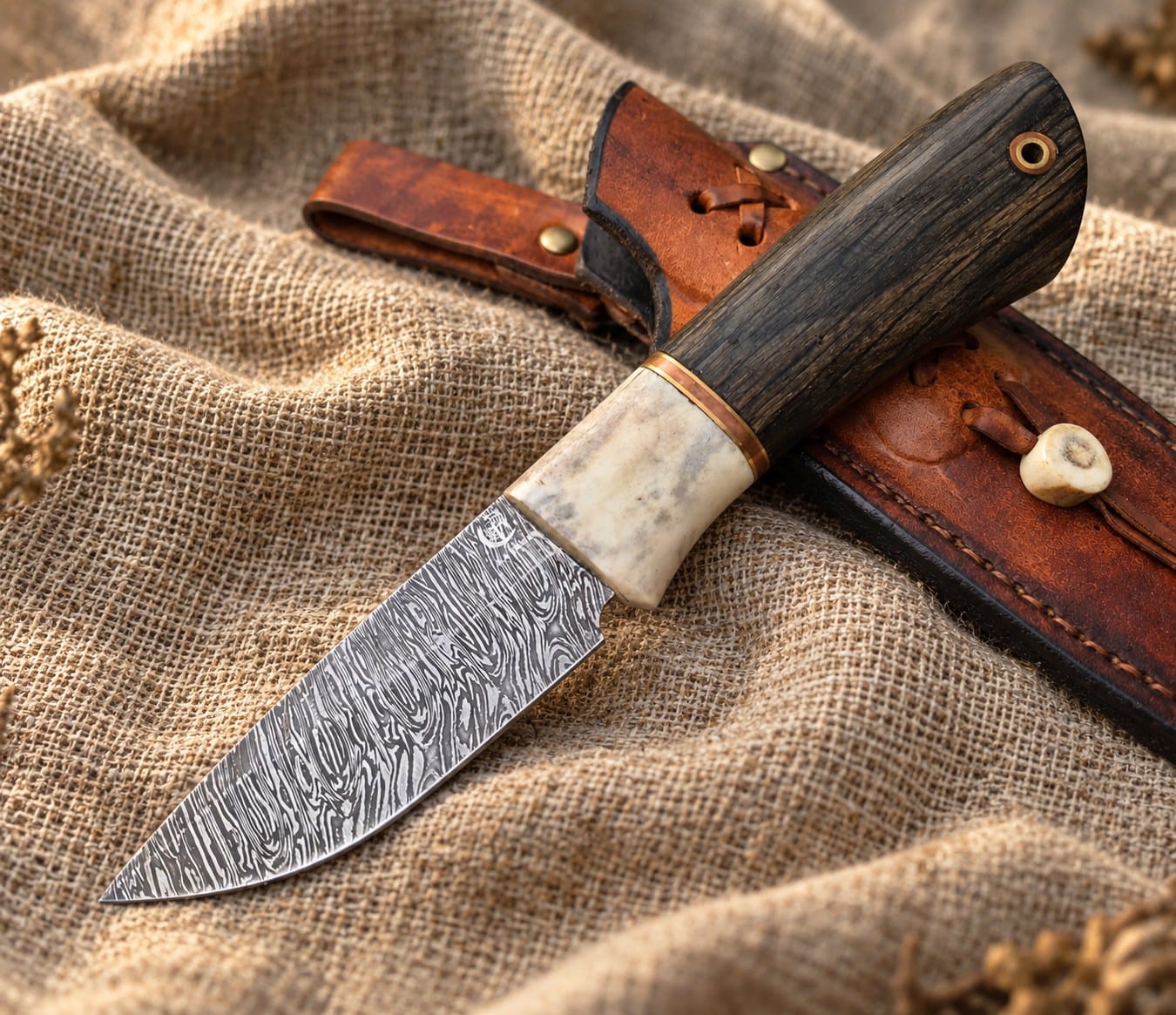
| Damascus | Layers of steel forged together, giving the flowing pattern | Dry and oil after use; some layers can stain |
| Sandvik 12C27 | Swedish stainless steel, takes a very fine edge and is easy to resharpen | Low maintenance; still dry after use |
| Böhler N690 | Austrian stainless steel alloyed with cobalt, holds an edge well | Low maintenance; still dry after use |
Hardness is given in HRC (Rockwell). Around 58–62 HRC is typical for a quality knife: harder steel holds its edge longer, softer steel is tougher and easier to sharpen.
Everyday care
- Wipe the blade clean and dry right after use, especially after acidic food, fish or game.
- Keep a drop of food-safe oil on the blade, particularly damascus.
- Never use the dishwasher, and never leave the knife soaking or wet.
- Do not store the knife in its leather sheath for long: leather holds moisture and tanning agents can mark the steel.
Sharpening
Use a whetstone, starting with a medium grit and finishing on a fine one, and hold a steady angle, usually around 15–20° per side. A few strokes on a ceramic rod or leather strop between sharpenings keeps the edge keen. Avoid pull-through sharpeners on a hand-forged blade.
Handles and sheath
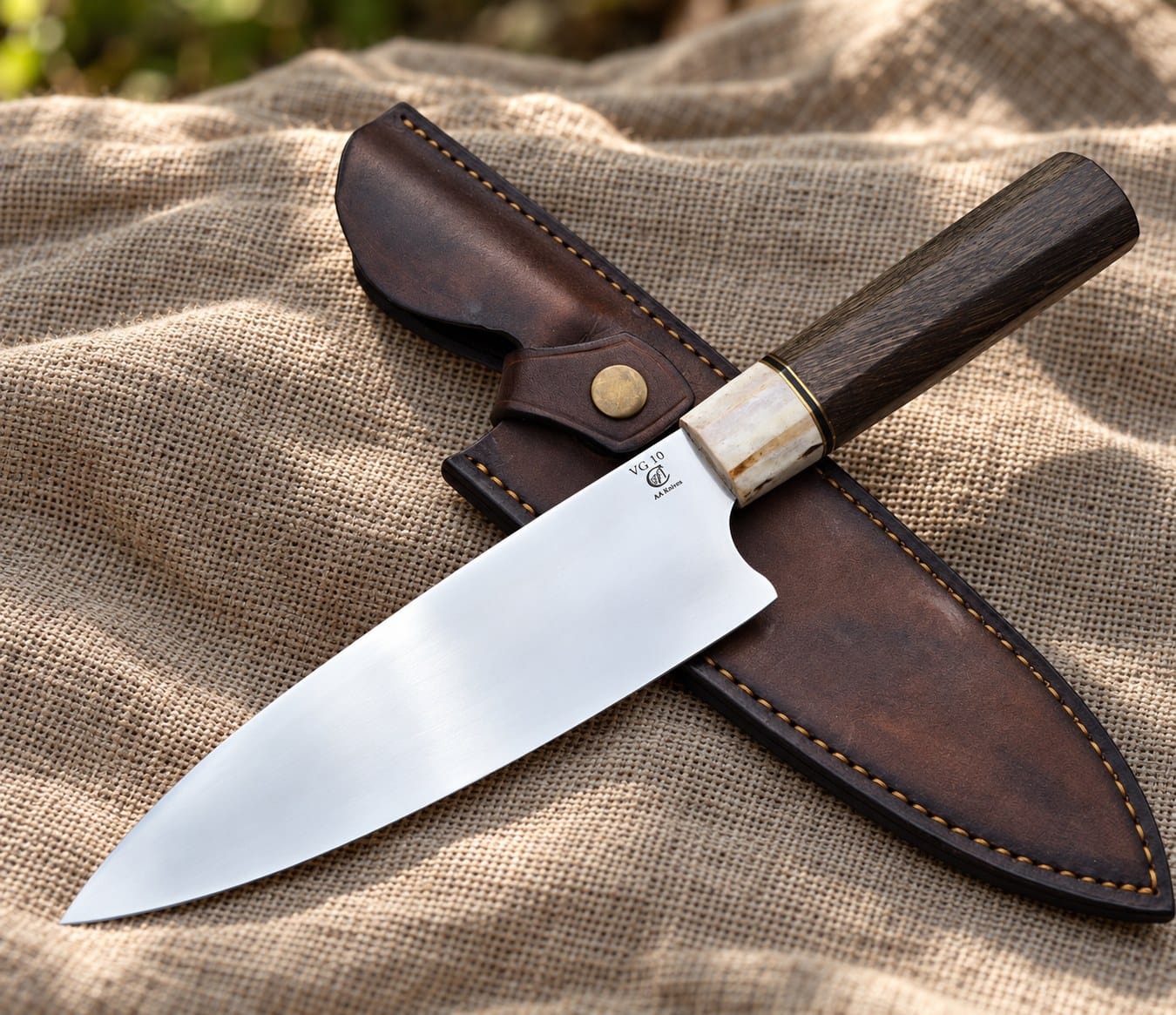
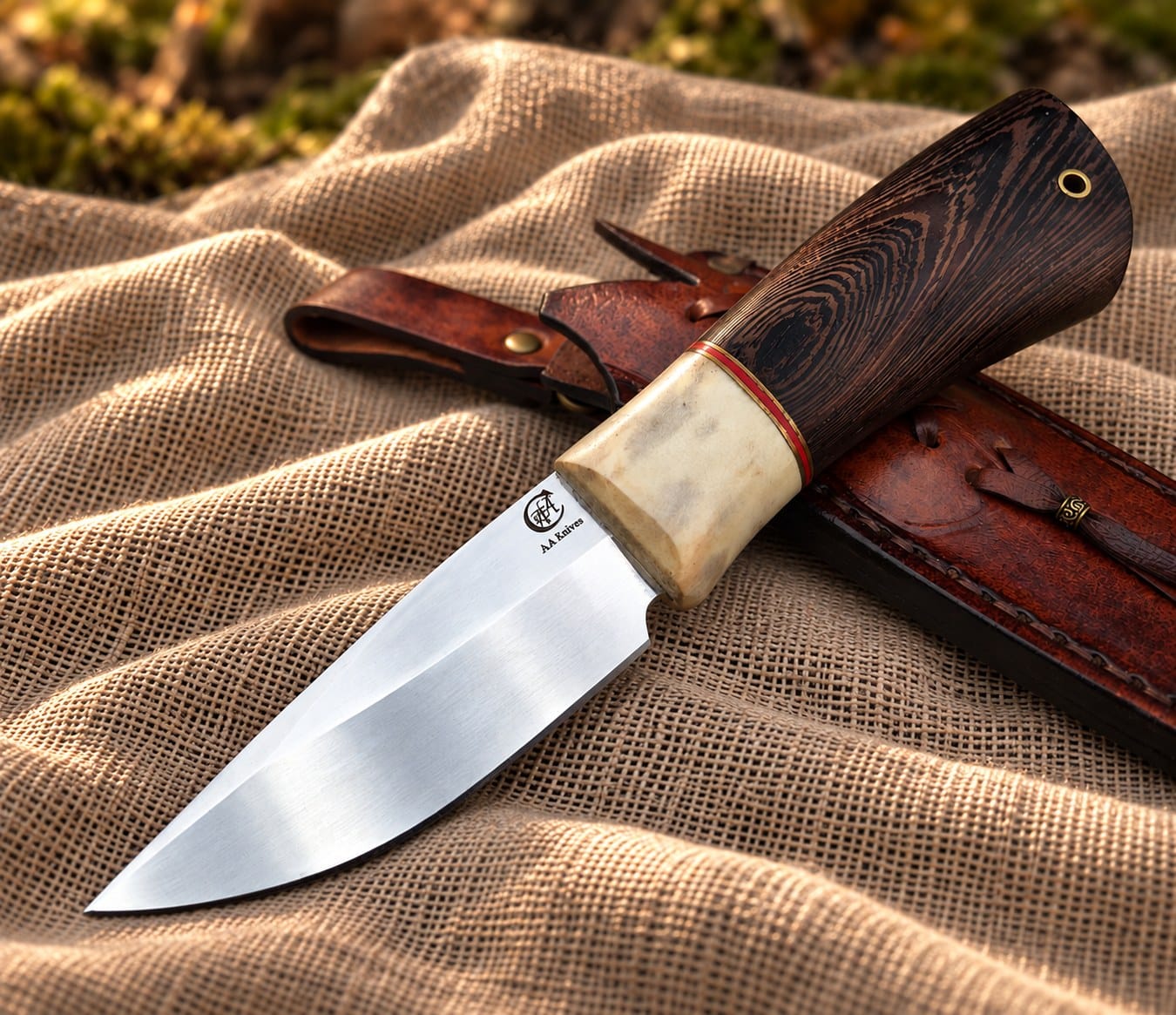
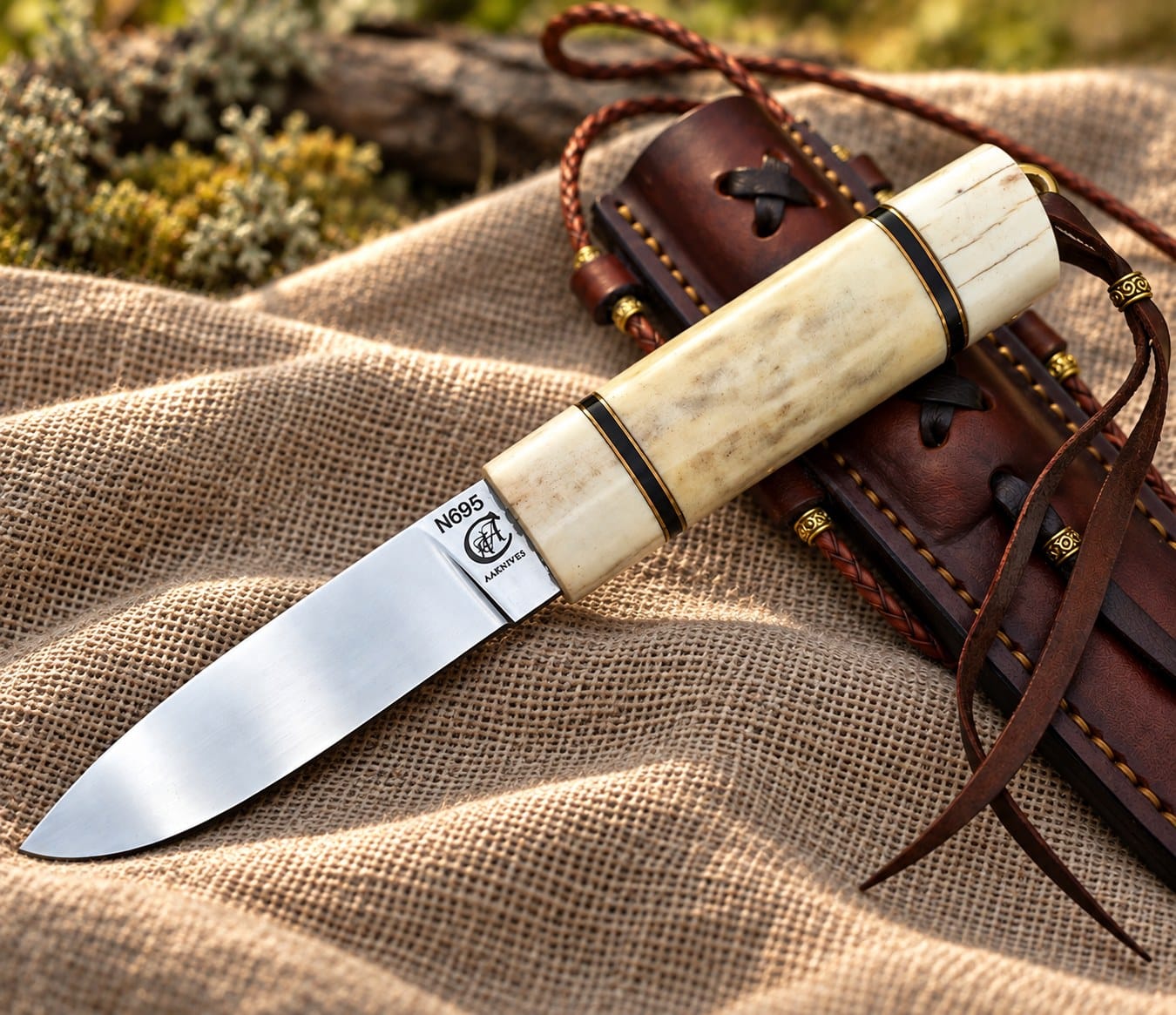
Antler, bog oak and other woods are natural materials: wipe them dry, keep them away from heat and long soaking, and treat wood now and then with a little oil or wax. Keep the leather sheath dry and condition it occasionally with leather balm.
Questions and answers
- Does a damascus knife rust?
- It can, if the layers include carbon steel and the blade is left wet. Wipe it dry after use and keep a thin film of food-safe oil on it, and it will stay bright.
- What oil should I use on a knife?
- A food-safe oil such as mineral oil or camellia oil. Avoid cooking oils that can turn rancid and sticky.
- What does HRC mean on a knife?
- HRC is the Rockwell hardness scale. Quality knives are usually 58–62 HRC: higher holds an edge longer, lower is tougher and easier to sharpen.