Latvian black ceramics: how smoke-fired pottery is made
Updated · Delmara Baltic Living
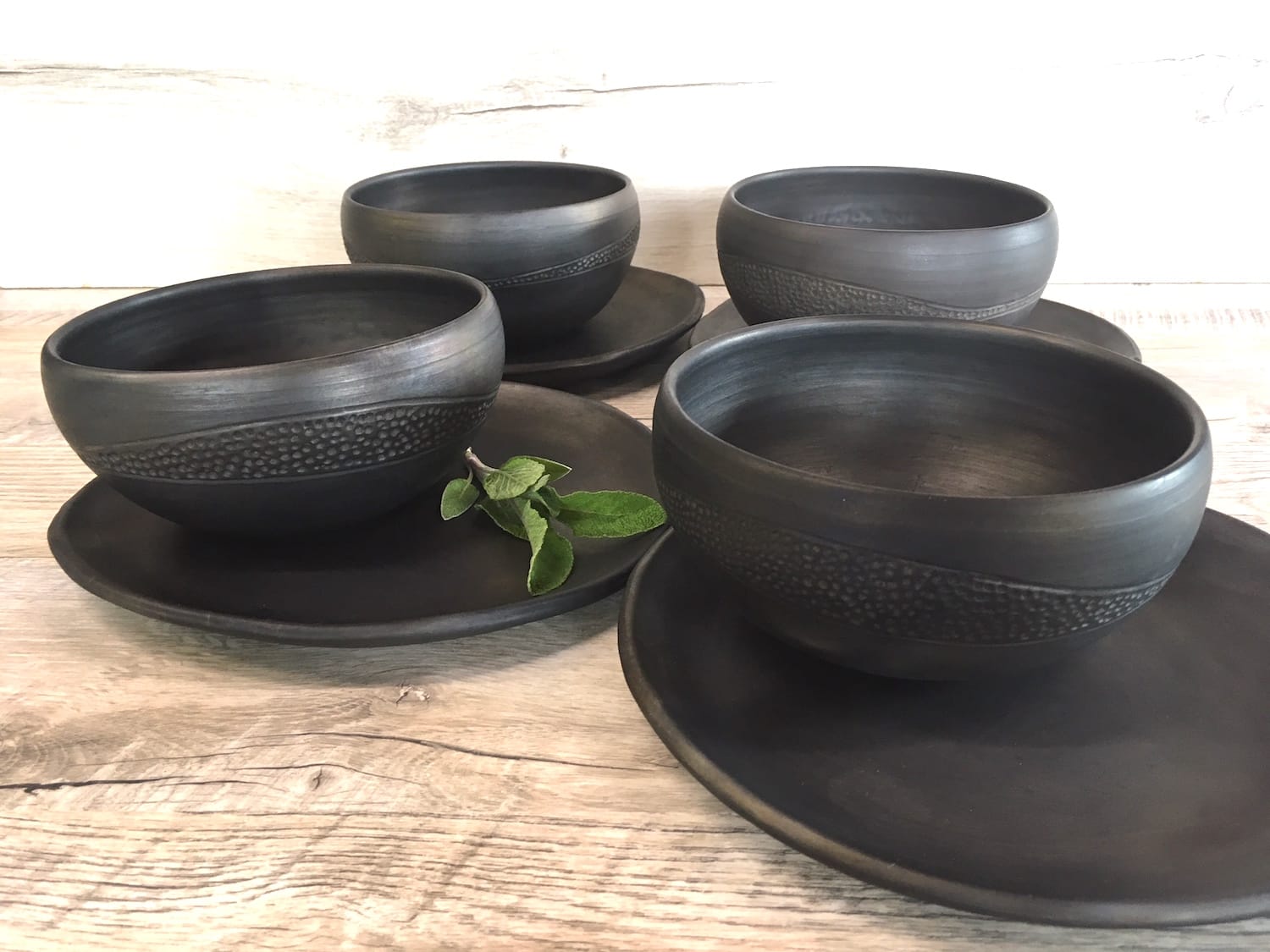
Latvian black ceramics is clay fired at around 1050 °C and then smoked: at the end of the firing the kiln is sealed and starved of oxygen, and carbon from the smoke turns the clay a deep silver-black. The colour comes from the fire, not a paint, so every piece is shaded differently. It is used for cups, bowls, teapots and vases and is best washed by hand.
An old technique, still in daily use
Smoke-fired pottery is one of the oldest ways of finishing clay around the Baltic, and in Latvia it never disappeared. A handful of workshops still fire this way. One of them is Cepļi, the studio ceramic artist Ingrīda Žagata founded near the Vidzeme coast in 1985, where pieces are thrown from Latvian clay and fired in an open-fire kiln. Since 1996 the workshop has also welcomed visitors to demonstrations and kiln openings.
How black ceramics is made
- The piece is thrown on the wheel or built by hand from local clay, then dried slowly.
- Many pieces are burnished or engraved while the clay is leather-hard, which later gives the surface its sheen and pattern.
- The kiln is fired with wood to about 1050 °C.
- At the peak, the kiln is closed and starved of oxygen. The fire smoulders, and carbon from the smoke penetrates the clay (a reduction firing).
- When the kiln is opened, the pieces come out silver-grey to deep black, each shaded differently by flame and smoke.
Using and caring for black ceramics
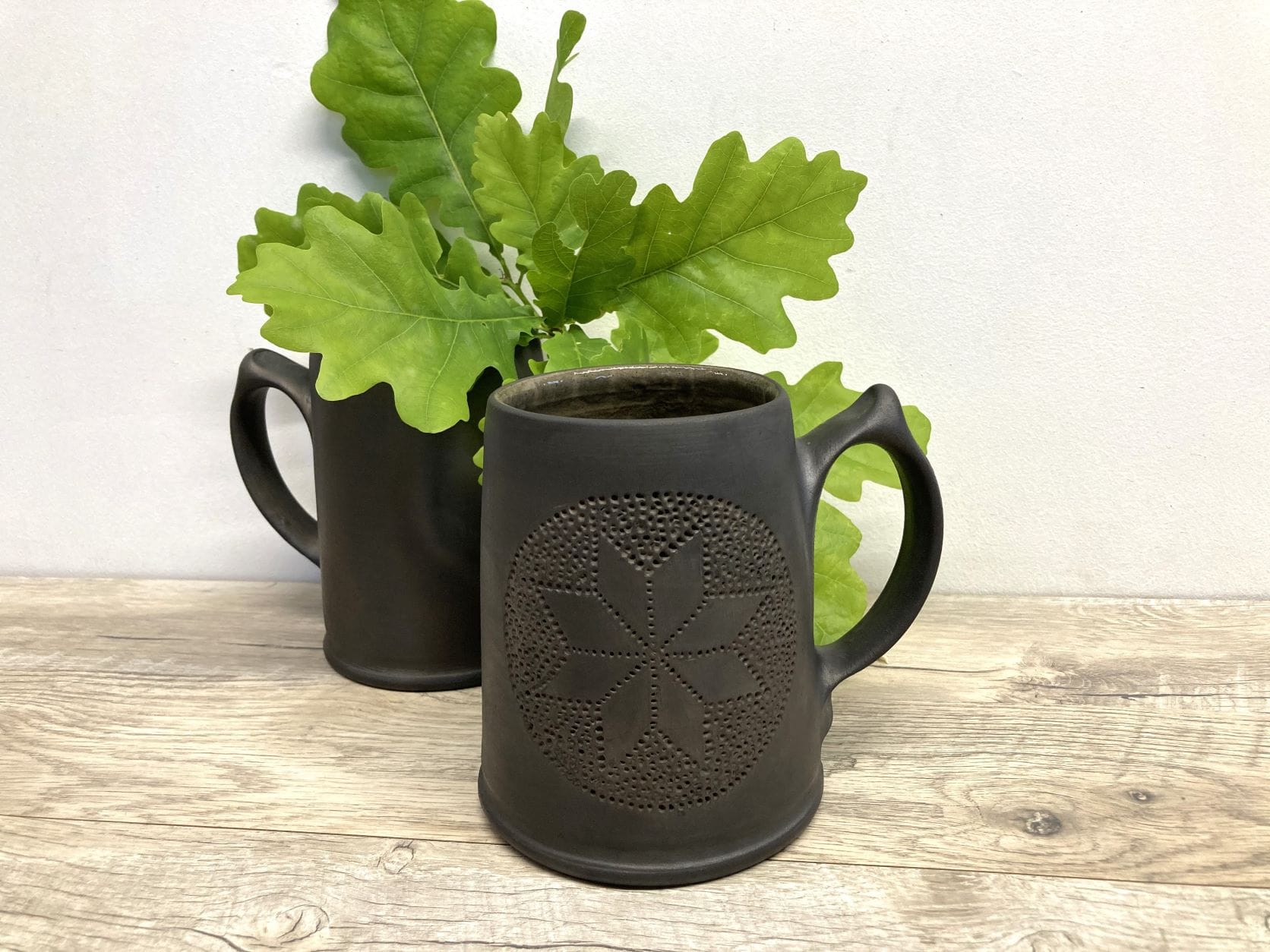
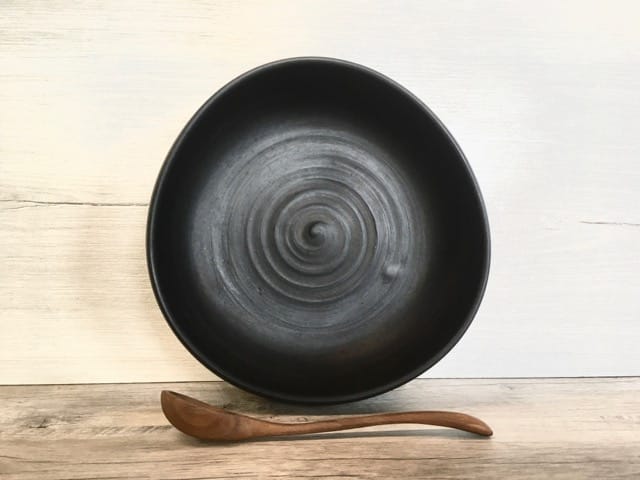
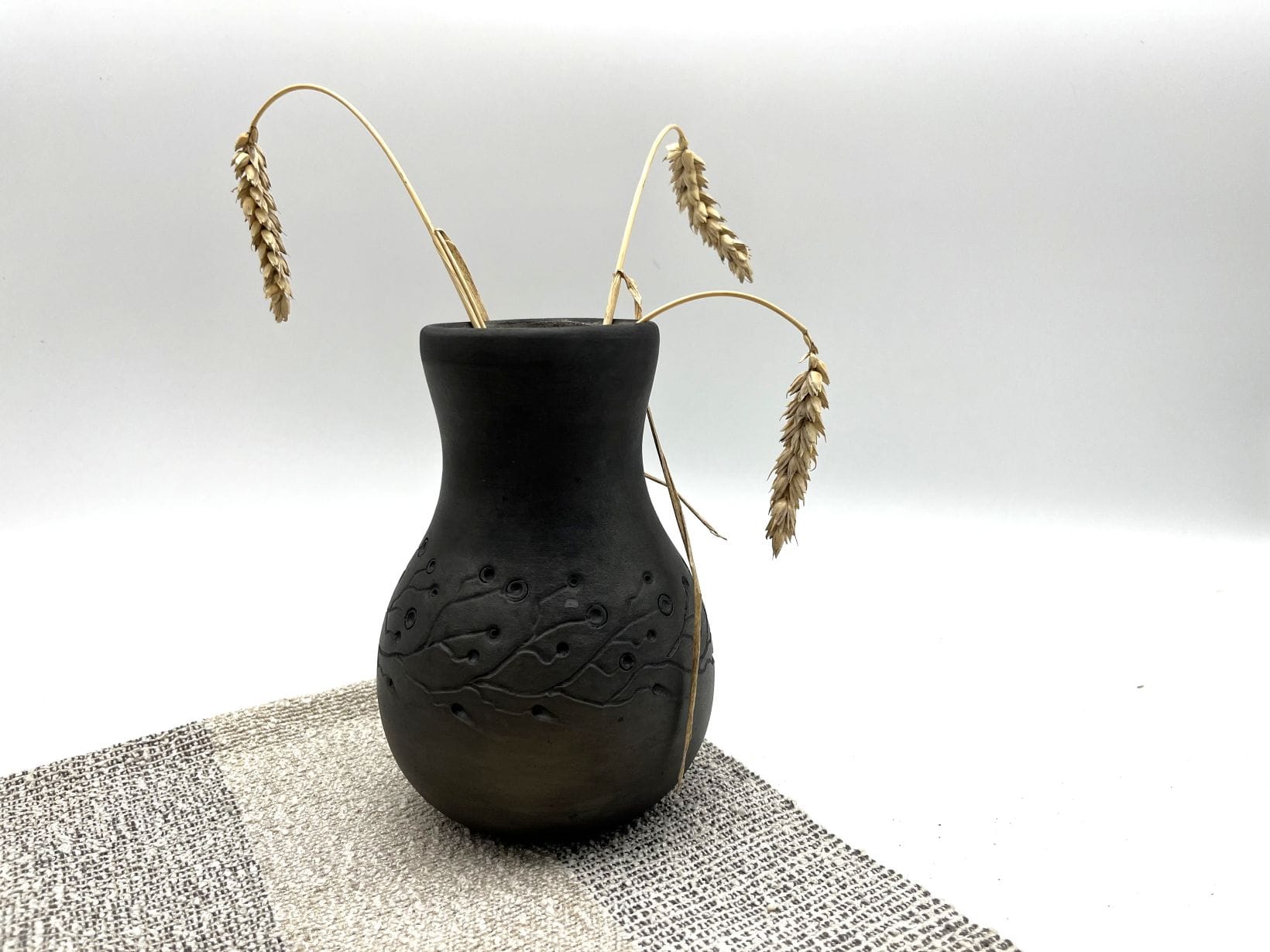
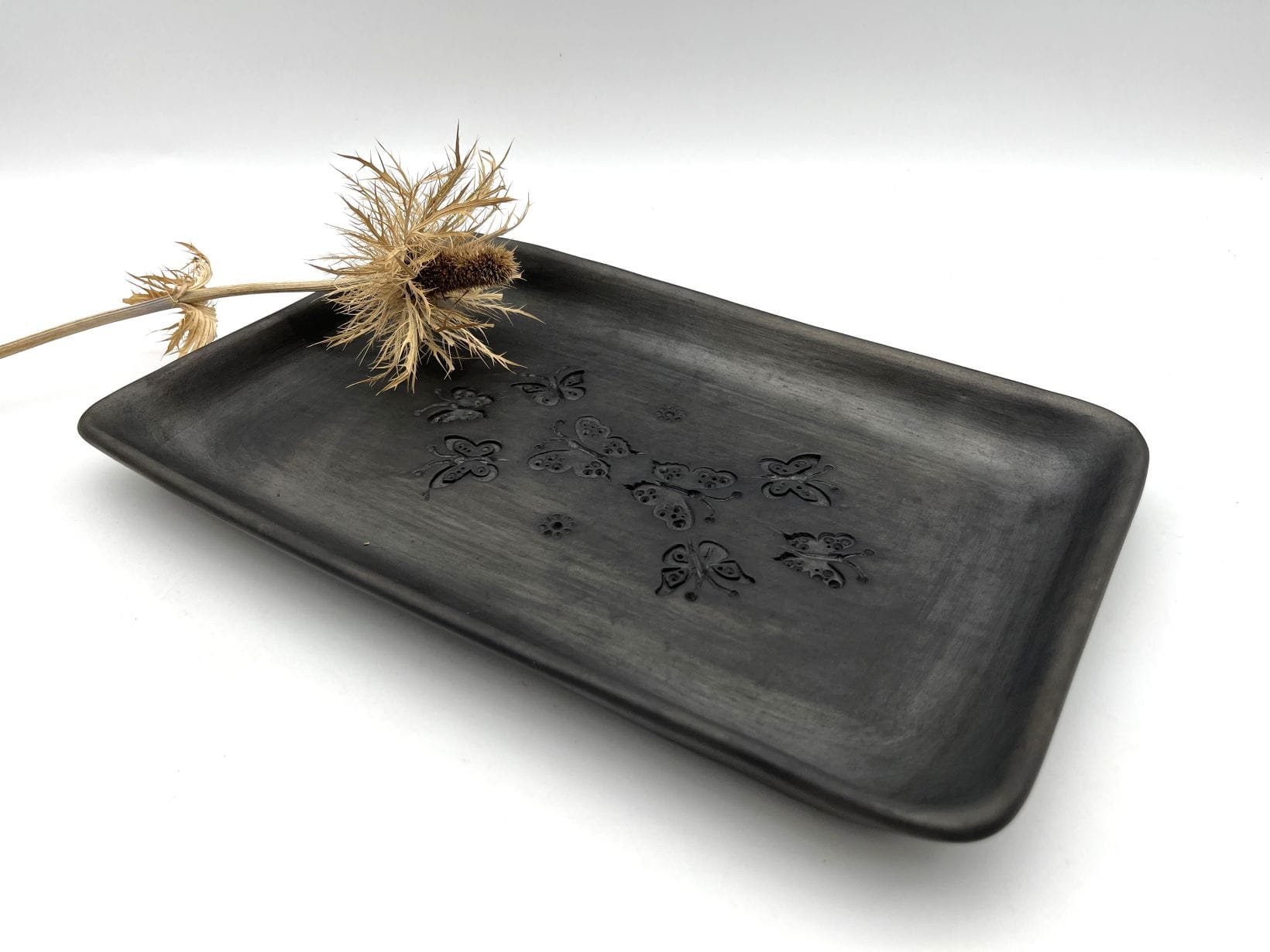
Black ceramics is made for the table: cups, bowls, teapots and serving plates. Wash it by hand with warm water and a little mild detergent rather than in the dishwasher, and do not use it in the microwave. Where the clay is not glazed it is slightly porous, so dry it well and use a glass insert in vases for fresh flowers. With use the surface deepens and gains a soft patina.

Questions and answers
- Why is black ceramics black?
- Because of a reduction firing: at the end of the firing the kiln is starved of oxygen, and carbon from the smoke penetrates the hot clay, turning it silver-black. No black paint is used.
- Is black ceramics food safe?
- Yes. It is fired clay coloured by carbon and has been used for food and drink in Latvia for generations. Wash it by hand and dry it well.
- Can black ceramics go in the dishwasher?
- We recommend hand washing. Dishwasher detergents and heat can dull the silver-black surface over time.