How to tell real Baltic amber from fake
Updated · Delmara Baltic Living
Real Baltic amber is very light, feels warm to the touch, floats in strongly salted water and glows a milky blue-white under UV light. Glass is heavy and cold, most plastics sink in salt water, and young copal resin turns sticky with a drop of solvent. The surest sign is a seller who names the amber type, its treatment and the maker.
What Baltic amber is
Baltic amber is fossilised tree resin from forests that grew around the Baltic region some 40 million years ago. It is found along the Baltic coast, from Poland and Kaliningrad to Lithuania and Latvia, where pieces still wash up after storms. It is unusually rich in succinic acid, which is one reason it is valued above other ambers.
Six tests you can do at home
- Weight: amber is barely heavier than water. A large bead feels surprisingly light; glass feels heavy.
- Warmth: hold it in your hand. Amber warms quickly and never feels cold like glass or stone.
- Salt water: dissolve plenty of salt in a glass of water until no more dissolves, then drop in a loose stone. Amber floats; glass and most plastics sink. Do not test pieces with metal parts this way.
- UV light: under a UV torch, Baltic amber glows a milky blue or greenish white. Many plastics do not.
- Smell: rub the amber hard on cloth until warm. Real amber gives off a faint pine-resin scent.
- Static: rubbed on wool, amber becomes charged and picks up tiny scraps of paper. Some plastics do too, so use this together with the other tests.
Avoid the hot needle test: it damages the piece and is unreliable in inexperienced hands. A drop of acetone on a hidden spot tells amber from copal (copal turns sticky, amber does not), but it can also mark the surface.
Natural, treated, pressed and fake: what the words mean
| Type | What it is | Is it amber? |
|---|---|---|
| Natural amber | Raw or polished stone, only shaped by hand | Yes |
| Heat-treated amber | Natural amber clarified or coloured with heat and pressure; often shows golden ‘sun spangles’ | Yes, but treated |
| Pressed (reconstructed) amber | Small amber pieces fused under heat and pressure into a block | Made from amber, worth much less |
| Copal | Young tree resin, thousands rather than millions of years old | No |
| Imitation | Plastic, resin or glass made to look like amber | No |
Treated and pressed amber are legitimate products, but a good seller says so. Prices that look too good for a large, even-coloured bead are usually a sign of pressed amber or plastic.
What to ask a seller
- Is it natural Baltic amber, and has it been heat-treated or pressed?
- Who made the piece and where?
- What are the exact dimensions and weight?
- Is the piece in the photos the one you will receive?
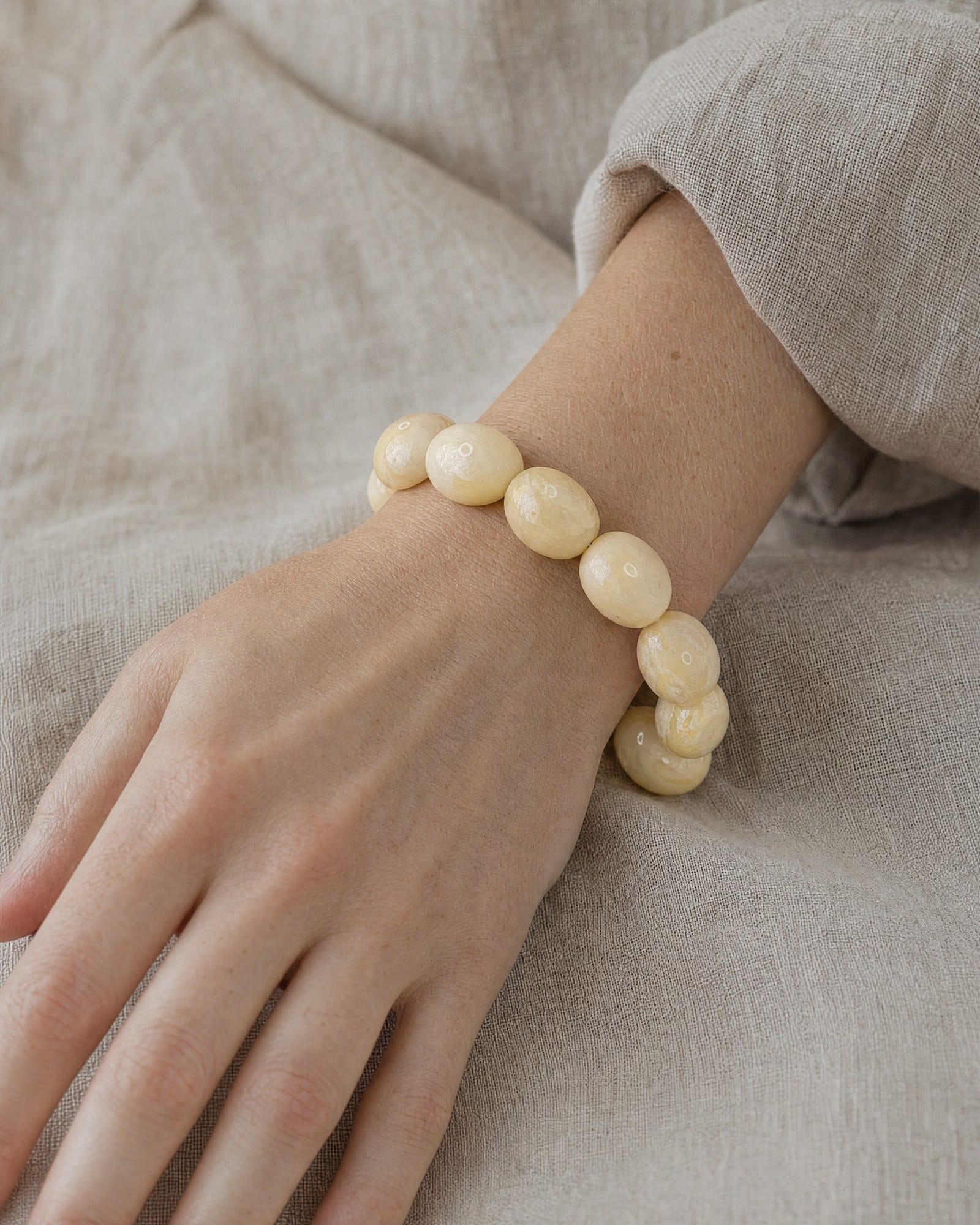
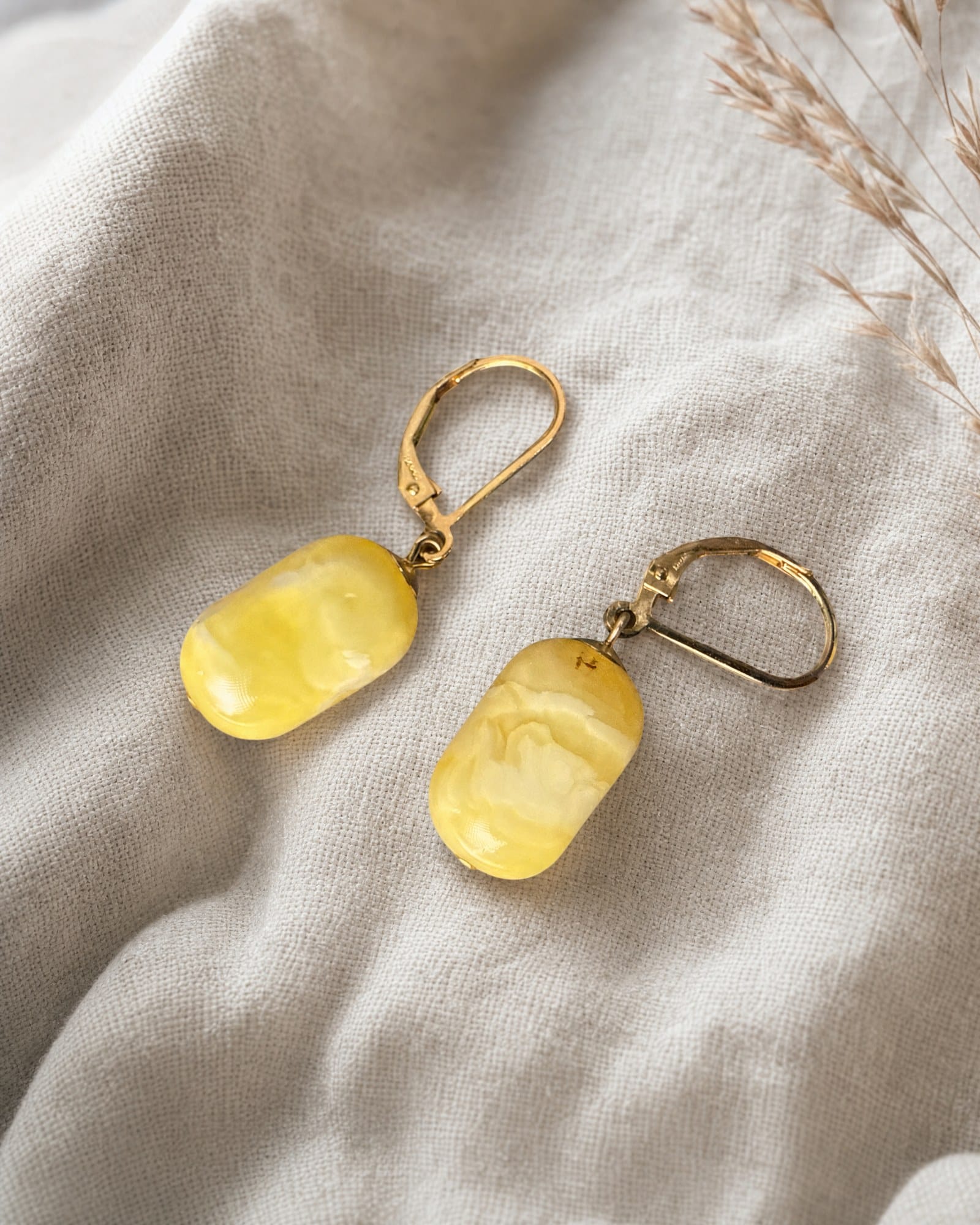
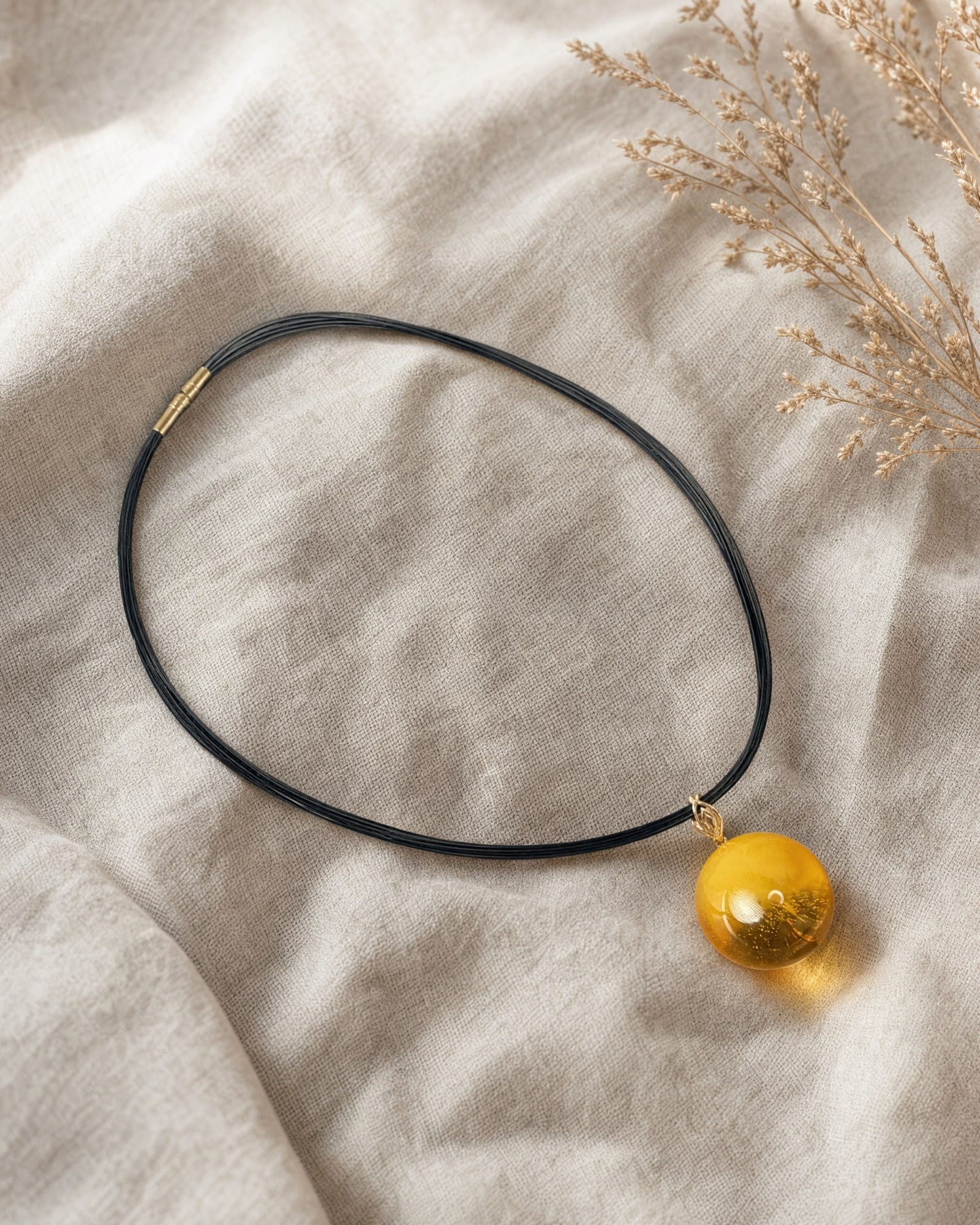
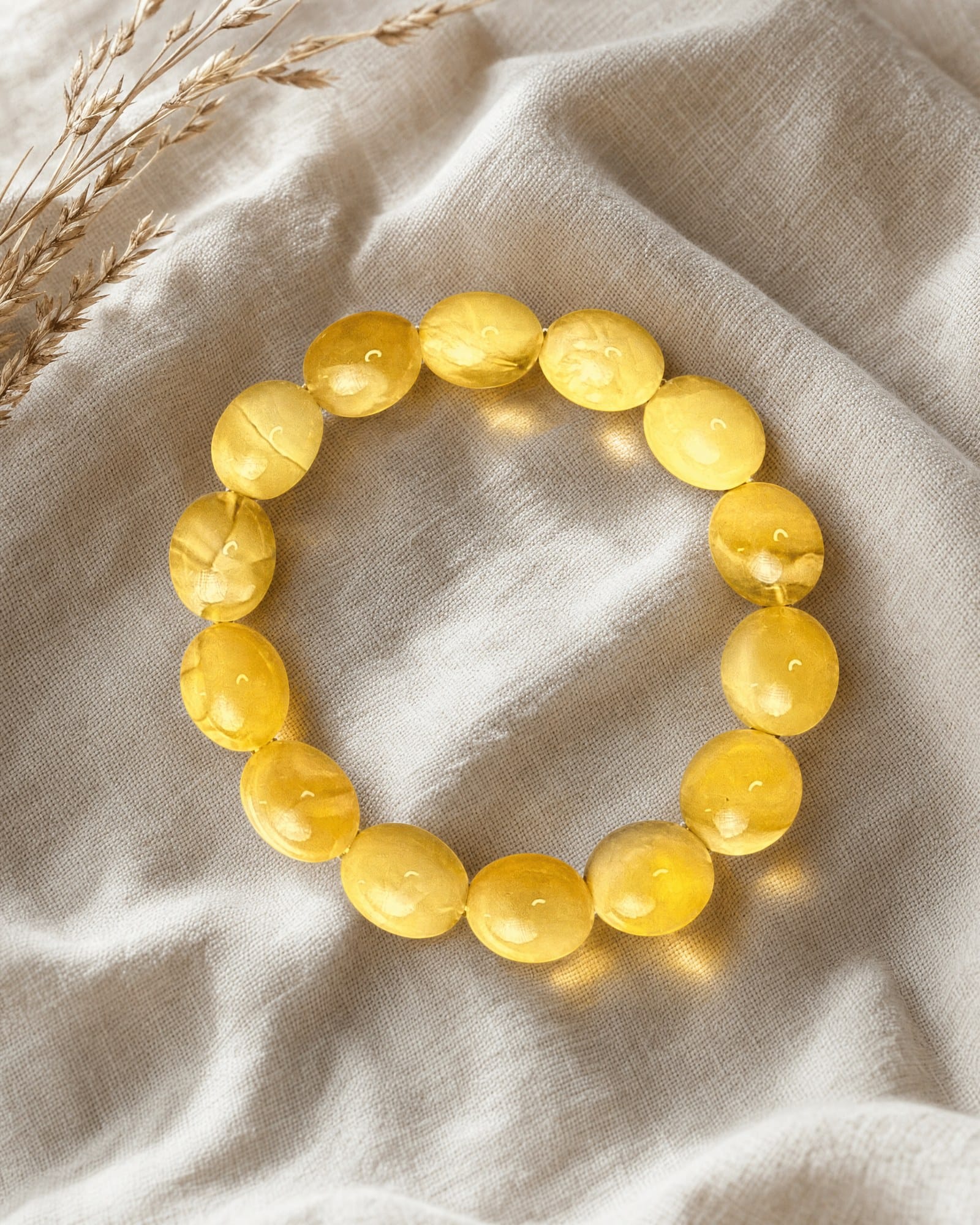
At Delmara, every amber piece is natural Baltic amber by Georgs Romulis in Riga, and each listing gives the amber type, surface, dimensions and weight. The piece in the photos is the one you receive.
Questions and answers
- Does real amber float?
- In fresh water amber sinks slowly, but in strongly salted water it floats, while glass and most plastics sink. Copal floats too, so combine the salt-water test with the UV or smell test.
- Is pressed amber real amber?
- Pressed or reconstructed amber is made from real amber pieces fused under heat and pressure. It is amber, but it is worth much less than a natural stone and should be labelled as pressed.
- Why does real amber glow under UV light?
- Organic compounds in Baltic amber fluoresce under ultraviolet light, giving a milky blue or greenish-white glow. Most plastic imitations do not react this way.